
Alameda Weekly Arrest Log Sources
Alameda County has no weekly booking blotter. The sheriff posts no 72-hour, three-day, or other multi-day arrest log. The old daily log was retired in July 2026. The surviving inmate locator only finds a known person in custody. It is not an archive. So a reader wanting several days of activity must go agency by agency. Oakland Police publishes date-labeled Daily Log PDFs and keeps an online 2026 archive. Fremont's Week in Review is selective. Hayward Police posts weekly blotters with aggregate arrest counts. Cite-and-release events are included, plus chosen incident narratives. Each source differs in scope, and none should be renamed as the county arrest log.
These distinctions matter when numbers get compared. Oakland's arrest dashboard counts only custodial arrests, leaving cite-and-release cases out. Hayward's weekly total includes them. Fremont's summary picks its cases, and none of the three amounts to a full Santa Rita booking history, though each can help you locate an event.
Read Alameda Police Blotters
Start with the agency that made the arrest. A police blotter captures police activity: calls, reports, citations, selected investigations, and custodial arrests. The ACSO locator is different. It shows current or recent county custody instead, so treat the two as layers rather than duplicates.
- Identify the arresting agency and approximate event date.
- Open that agency's official log, blotter, or review page.
- Select the newest date range that includes the event.
- Note the report number, date, place, and stated arrest outcome.
- Check the ACSO locator if county custody is still expected.
- Request the police or booking record when the post lacks detail.
The OPD Daily Log is Oakland's clearest dated source. Fremont's official Week in Review highlights selected matters. Hayward's transparency hub links weekly material and data. When a report says someone was booked, verify current county status separately. For a same-day search of a known person, the Daily Arrest Report guidance explains the retired 24-hour county window and the live locator.
Alameda Arrest Log Entry Fields
Alameda County arrest log entries are not uniform across sources. Each police department publishes different fields. A city entry may describe an incident, yet say nothing about a county booking. A weekly arrest total may count arrests without names. So read each Alameda entry only for what its named source states.
| Possible field | How to interpret it |
|---|---|
| Date and time | May be the event, arrest, report, or publication time; check the label. |
| Agency and report number | Identifies the police custodian and helps frame a records request. |
| Location | Shows where an event was reported, not necessarily where custody continued. |
| Arrest or citation | Distinguishes custodial action from cite-and-release when the source does so. |
| Charge description | States an charge at that stage. |
| Booking destination | May point to Santa Rita or a local temporary hold before transfer. |
| Photograph | No fixed photo policy was verified for the city log pages inspected. |
The ACSO current-custody locator lists no booking photo. A city news release may include a case image, but that is editorial context rather than an ongoing booking-photo gallery. There is no continuous mugshot feed for Alameda County. To obtain a specific image or a redacted record, ask the source agency directly what it can release.
Weekend Alameda Arrest Posting
Alameda County has no set weekend or holiday posting schedule. Don't count on every Friday-through-Sunday arrest showing up in one Monday list. Oakland posts dated daily PDFs. Fremont and Hayward each use weekly formats, published on their own calendars. The reliable habit is to open the latest dated Alameda post. Then open the one that follows that weekend. Timing also splits records across systems. A police report can exist before county booking finishes. A local hold may precede transfer. A citation can close the custody event with no Santa Rita entry at all. Even after booking, someone may be released before the next weekly arrest roster posts. So current custody and past police activity answer two different questions.
Note the time you check each Alameda source. That habit pays off. It explains why a later locator result or court record differs from what you saw first. A timestamp turns confusion into a simple before-and-after.
Three Alameda Blotter Patterns
Fragmentation is the story here. Alameda County's three big-city blotters each do something different. None add up to a countywide arrest total. Oakland organizes its log by date, which works well for finding a specific incident. Fremont goes weekly and adds narrative detail on selected cases. Hayward mixes arrest statistics with chosen incident summaries. Its own blotter warns that entries can shift or get reclassified later. For seeing the dated format in action, open the OPD Daily Log. It sits on Oakland's official site.
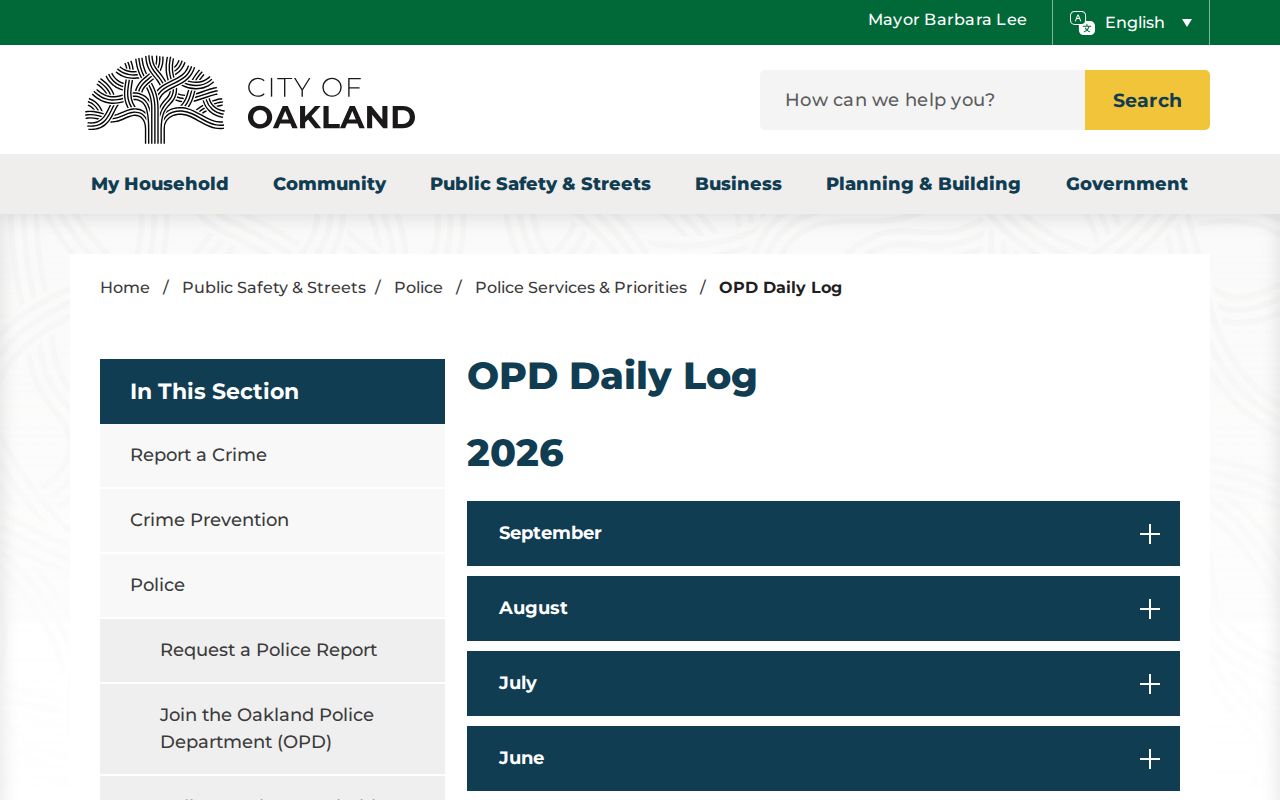
Dates are the real payoff on an Oakland blotter entry. Pin down the day, and requesting the matching report gets much easier. Hayward's weekly police blotter shows another way to lay out the same kind of arrest information.
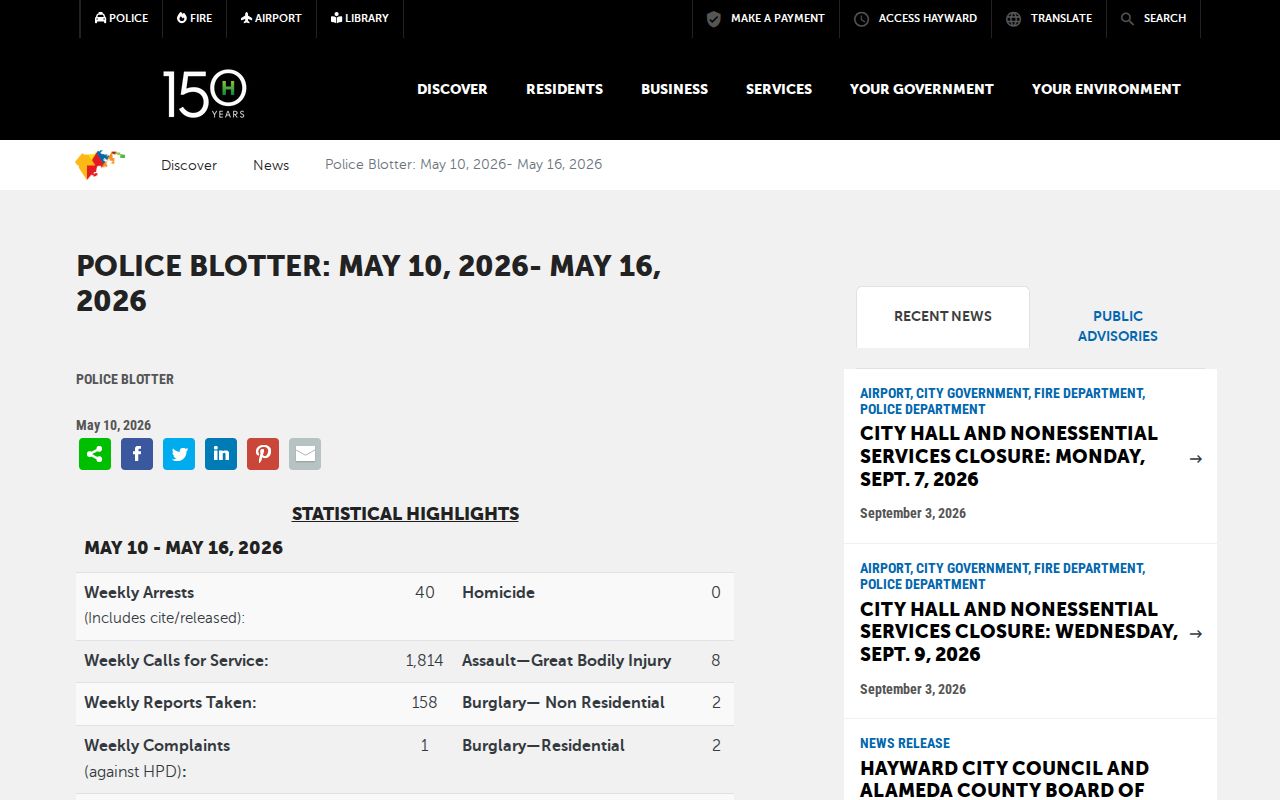
Keep the labels straight. What Hayward publishes is Hayward arrest information, not a countywide booking count. Used right, these blotters shine at one job. They point you to the agency that handled an incident and the report it generated. They cannot say who is in custody right now. Nor can they tell you how a case ended in court.
Alameda Arrest News Archives
News coverage adds a layer the police posts lack. Still, treat it as a secondary source. The Berkeley Scanner reported on the 2026 retirement of the county's daily log and tracks public safety across Berkeley and the wider county. The Oaklandside focuses on Oakland and Berkeley safety stories. East Bay Times keeps a deep archive, though some of it sits behind library or paid access. That archive lives on NewsBank, and none of these outlets doubles as a live custody roster.
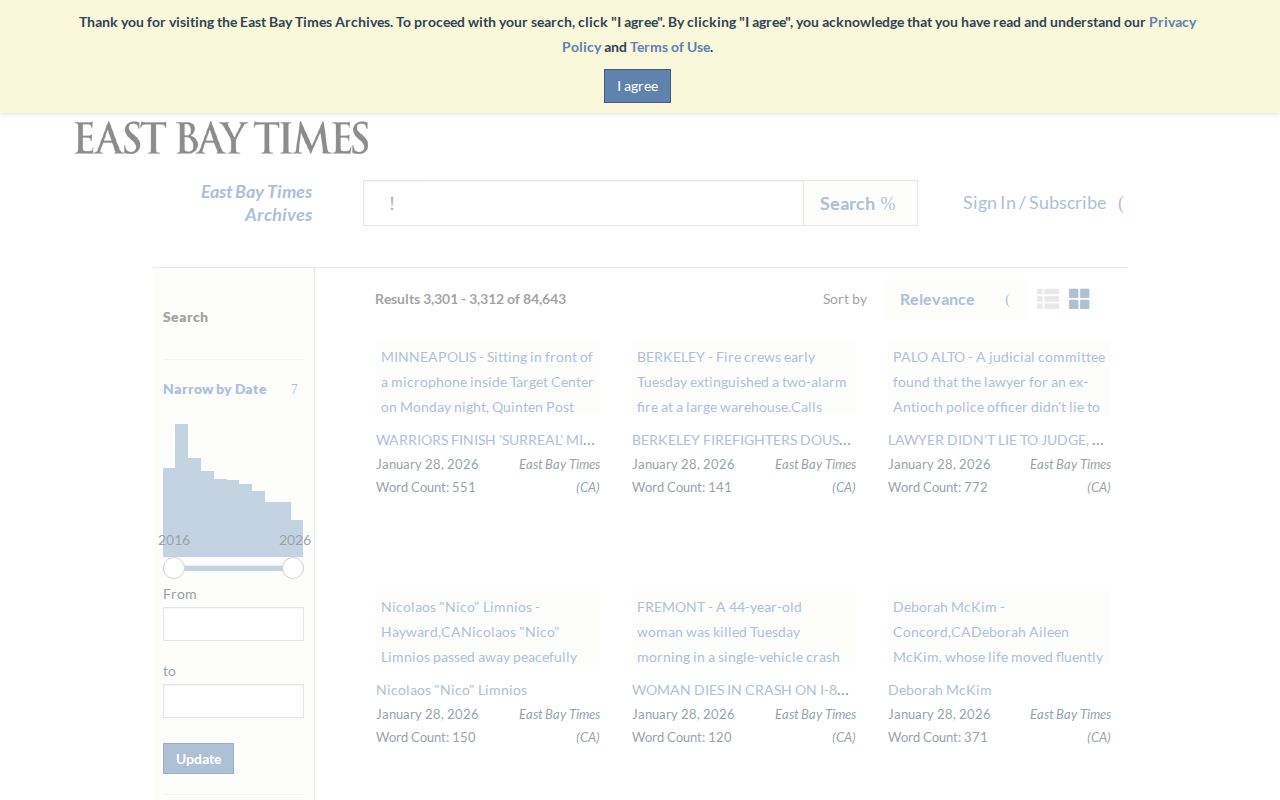
A dated news story with a named outlet makes a solid starting point. Still, confirm the arrest itself with the police department, the Alameda County Sheriff's Office, or the court. Do that before treating it as settled fact.
Unofficial arrest sites deserve skepticism. Their Alameda pages run late, go stale, or drop a charge that was later dismissed. RecentlyBooked, Mugshots.com, and muglist all maintain county content. Yet none of them proves who is in custody now or what the county still retains. Some lean on historical material; others simply post their own update claims. Start with the official agency. Never treat a booking photo on a secondary site as the final word on guilt.
Older Alameda Arrest Records
For records that fall outside any published window, go straight to the custodian. The arresting city holds the incident or arrest report. For a county booking record or photograph, Alameda County Sheriff uses NextRequest. Include every identifier you have. Name, date, agency, report number, PFN, booking number, and court case number all help. The more specific the request, the fewer wrong-person matches.
ACSO's 2019 destruction policy sets different retention periods for reports and logs. Felony records are kept permanently, while misdemeanors may be destroyed four years after closure, and some categories carry shorter periods. The policy names no single booking-photo period. Litigation holds, sealing, exemptions, and permanent digital copies can each change what still exists. An old Alameda arrest record may survive, or it may already be gone.
Once a case reaches court, the Alameda Superior Court records page is the route for later filings. Odyssey covers only cases with activity since 2005, and plenty of documents never appear online. Plan on a records request for the full court file.
Alameda Arrests Require Context
A police log, a jail record, and a news story each freeze a different stage of one Alameda County arrest. Charges get reduced or dropped. Prosecutors sometimes decline to file at all. Before relying on any entry, verify the identity, the source date, the custody status, and the disposition.