
Alameda County Recent Arrest Channels
Alameda County runs no single arrest feed. Each source opens a different window. For someone believed to be in county custody, the Alameda County Sheriff's Office Inmate Locator is the official starting point. It searches by name or PFN. There is no browsable list of everyone arrested today. The Sheriff describes its data as the most recent known to the office, subject to change as a case moves through court. Public-record exemptions can leave some names out entirely. A blank result can mean several things. It may point to a release, an intake still in process, a citation, or a record held by the arresting city.
| Window | Official route | Purpose | Photo |
|---|---|---|---|
| Current custody | ACSO locator | Search one named person | No public field observed |
| Same day | Daily Arrest Report | Retired feed and current alternatives | No gallery |
| Several days | Weekly Arrest Log | City police publications | Case-dependent |
| Later outcome | Superior Court | Case and disposition | Not a photo source |
ACSO retired its daily arrest log in July 2026. The log had run for decades. Scammers, the office reported, were pulling names from the public list to pressure families with fake release demands. The searchable locator remains in service. Pages still advertising a last-24-hours checkbox are stale, and ACSO reminds the public that real law enforcement never demands payment by phone, text, or email for release, warrants, or missed court.
Search Alameda County Arrest Custody
The locator asks for a Personal File Number, called a PFN, or both a first and last name. Middle name, sex, date of birth, and a phonetic option can narrow a crowded result. Human verification is also required. PFN is the strongest search. Shared names and spelling errors can create false matches. The official locator screen shows the search fields, and any result is a custody snapshot rather than a full arrest history.
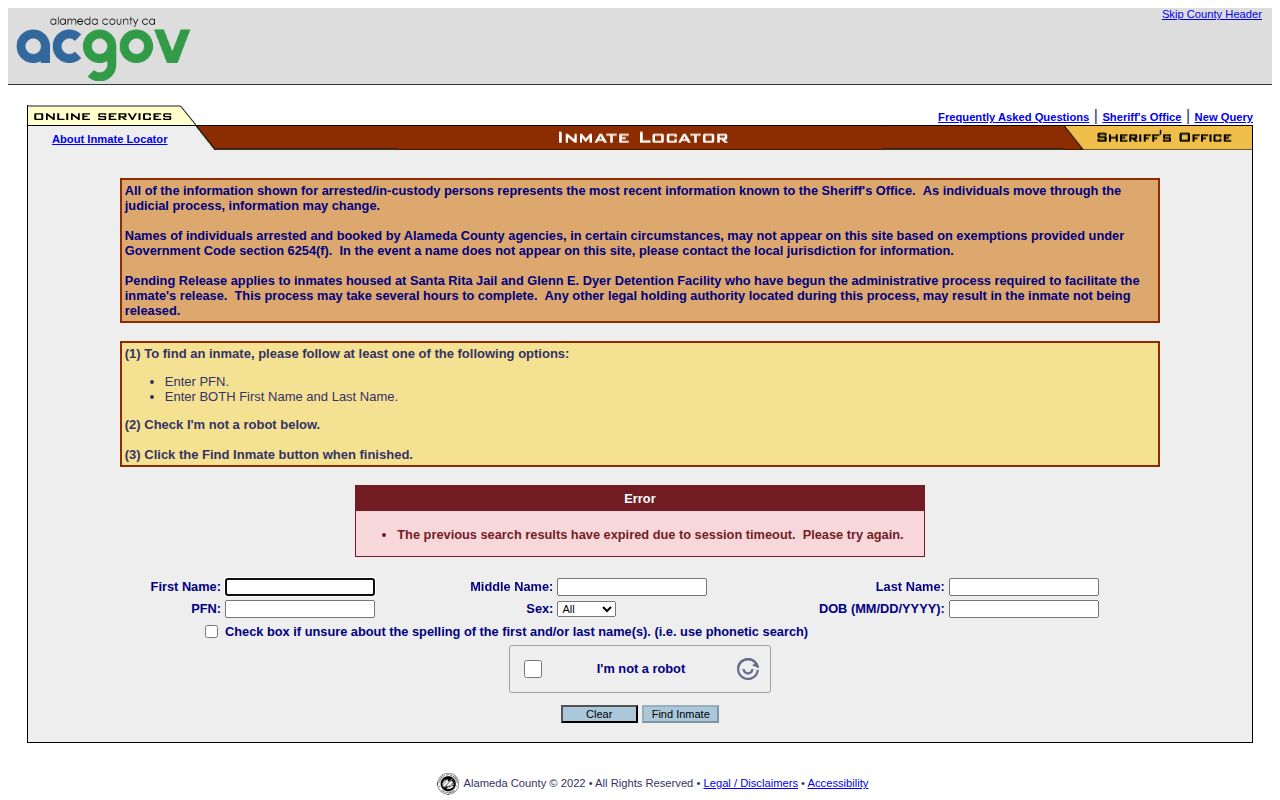
The search covers one person at a time. It does not return a daily arrest roster. There is no public booking-photo field either.
| Field | Use | Requirement |
|---|---|---|
| PFN | County personal file identifier | Can be used alone |
| First and last name | Name lookup | Both required |
| Middle name | Separate similar names | Optional |
| Sex and birth date | Confirm identity | Optional |
| Phonetic search | Similar spellings | Optional |
- Gather the legal name, birth date, and PFN if known.
- Enter PFN or both required name fields.
- Compare identifiers before accepting a match.
- Check the arresting city or request records if no match appears.
"Pending Release" sounds final. It only means release paperwork has begun. Another hold can still stop the walk out the door, so read the label with care. Older locator wording mentions the Glenn E. Dyer Detention Facility, but the county says Dyer closed for good in June 2019, and Santa Rita Jail, at 5325 Broder Boulevard in Dublin, is where county bookings now land.
When Alameda Arrests Reach Booking
An arrest and a booking are not the same moment. The street, the jail, and the roster differ. A past Alameda Grand Jury inspection described Santa Rita intake as a six-to-eight-hour process. Paperwork, health questions, a lobby photograph, property inventory, fingerprints, classification, and medical review filled the hours. That report covered 2018–2019. It explains possible lag, not a present processing time. A city officer may cite someone on the spot. Others go into temporary local holding. Some simply wait for the next transport. The roster can lag each of those steps. No current ACSO page promises an hourly refresh. Old documents calling the locator real-time are not a service guarantee.
Alameda County Arrests by City
City police records describe the arrest event. The county locator describes custody. Oakland's dashboard leaves out cite-and-release events, while Hayward's weekly numbers can count people cited and released. Fremont, for its part, highlights selected weekly cases, so treat each city's figures as their own measure rather than one combined county count.
- Oakland Recent Arrests connects the OPD Daily Log and custodial-arrest dashboard to county custody.
- Fremont Recent Arrests covers Week in Review, temporary holding, and Santa Rita transfers.
- Hayward Recent Arrests covers weekly blotters, transparency data, local holding, and county transfer.
The official OPD Daily Log offers date-labeled police activity PDFs.
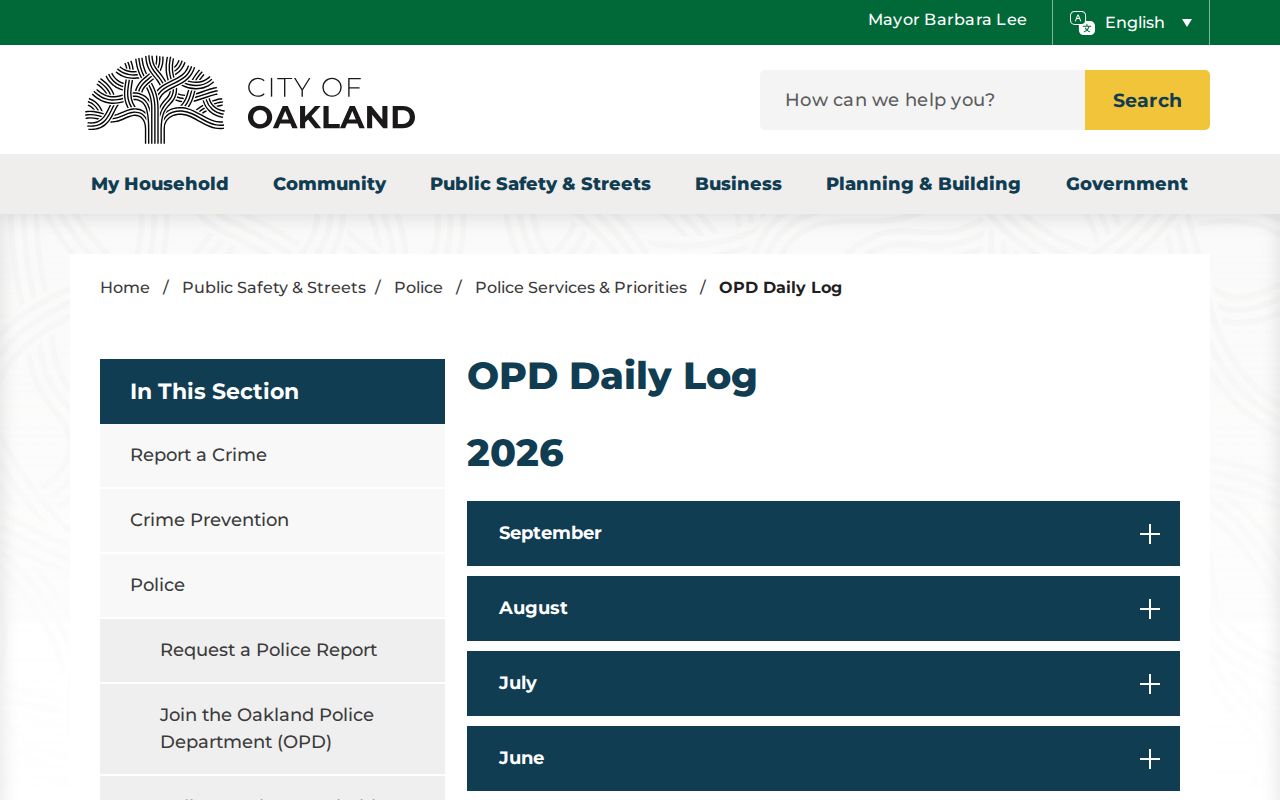
That log identifies city activity, while the ACSO locator answers current county custody.
Alameda County Booking Record Fields
A booking record begins with the arresting agency. It continues through jail intake. California Government Code section 7923.610 lists the arrest facts the public can see, subject to investigation, safety, confidentiality, and other limits. The list covers identity and physical description, arrest and booking times, location, circumstances, bail, release or holding place, charges, warrants, and holds.
| Group | Can show | Cannot prove |
|---|---|---|
| Identity | Name, PFN, birth data | A match without comparison |
| Event | Time, agency, place | Website refresh time |
| Charge | Charge, hold, bail | Guilt or sentence |
| Custody | Facility or release | Permanent history |
| Image | Photo if released | Public locator display |
| Court | Case and disposition | All documents online |
Booking is administrative intake at the jail. Arraignment is the first court appearance, and bail is a release amount or condition. A detainer is another authority's hold on the person. Disposition comes later and can be dismissal, a plea, a trial outcome, or a sentence, so the stages are not interchangeable.
Alameda County Mugshots and Photos
Photos are part of Alameda County booking history. Old county records confirm intake photos and internal identification systems, yet the current public locator shows no photo result. An image can exist without being displayed. Ask ACSO Records whether a specific photo or redacted booking record can be released, with the name, PFN, arrest date, and agency ready. The county publishes no official mugshot gallery. For state-prison custody after sentencing, use CDCR CIRIS. CIRIS has no documented photo field. CDCR keeps a separate identification-photo request process with safety and investigation limits. Unofficial sites copy booking data. None can confirm who is in custody. RecentlyBooked Alameda, Mugshots.com Alameda, and muglist Alameda each follow their own update rules, and Mugshots.com's Alameda pages lean heavily historical. RecentlyBooked has stated that Alameda supplies no mugshot images, so verify every name against official county records.
Request Alameda County Arrest Records
Need a booking record the locator does not show? The ACSO records portal is the route. If city police wrote the report, that city's records desk handles it too. The county routes arrest records and 911 transcripts to the Sheriff, while court papers belong with Superior Court, and no source names the Clerk-Recorder as custodian of arrest records. The official request portal accepts and tracks submissions.
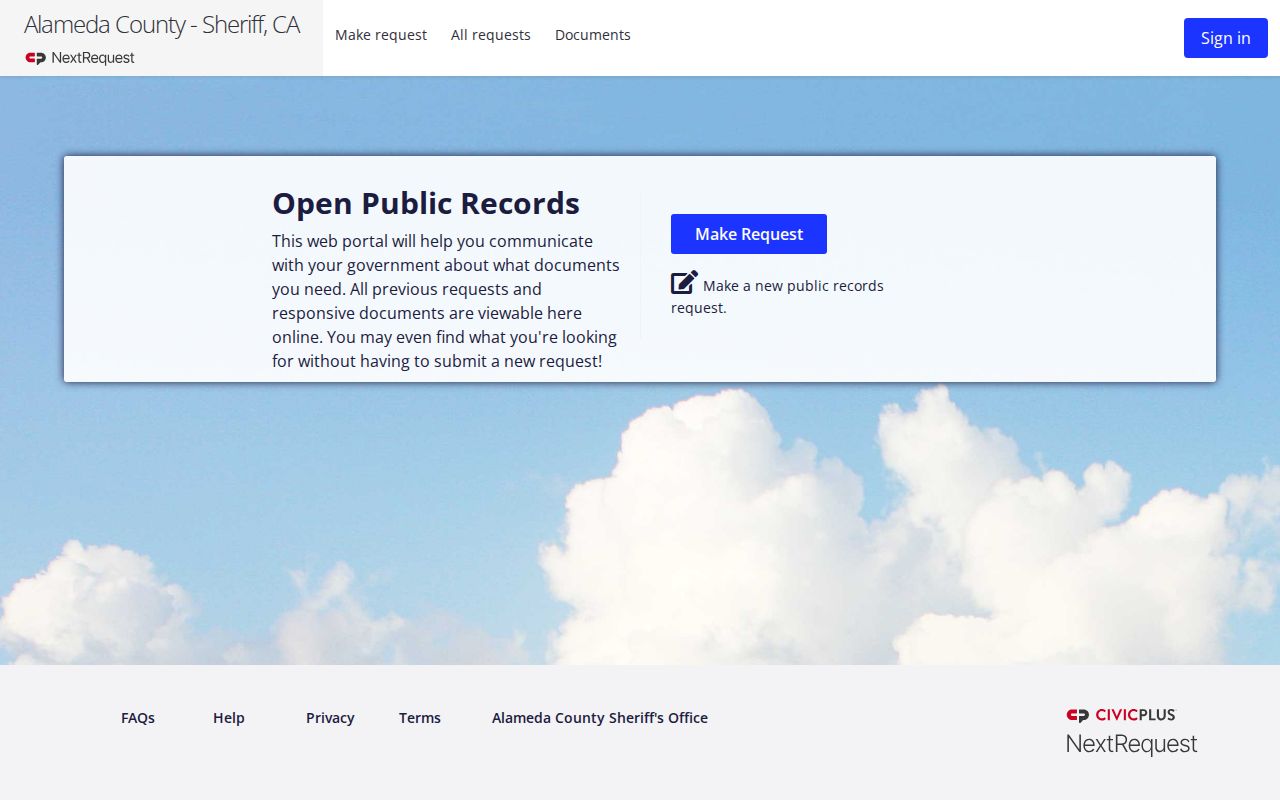
A narrow request helps staff identify the right record class and agency.
- Give the name, PFN, booking number, date, and arresting agency.
- Name the booking sheet, arrest facts, or photograph requested.
- Ask for electronic delivery, retention authority, and a fee estimate.
- Keep the request number and seek the city or court record separately.
The ACSO 2024 form gives the office ten business days for an initial disclosure determination. Duplication runs at actual cost, so a booking photo has no fixed price. A court's fee and the Sheriff's fee are separate things. Don't treat one quote as the other. The office can also withhold or redact records. It may cite investigations, privacy, safety, juvenile status, sealing, or any other lawful basis it invokes.
California Booking Photo Law
Nothing in California law orders an agency to keep a permanent online mugshot gallery. Government Code sections 7923.600 and 7923.610 strike a balance. They weigh investigation exemptions against the public's interest in arrest facts. Penal Code section 13665 is the narrower rule. It restricts how agencies share booking photos on social media in qualifying nonviolent cases and adds a 14-day removal rule with exceptions. Copies published independently don't vanish on that clock, though.
On the money side, Civil Code section 1798.91.1 bars publishers from demanding or accepting payment from the photographed person to remove, correct, alter, or withhold a booking image. The official statute spells out the rule.
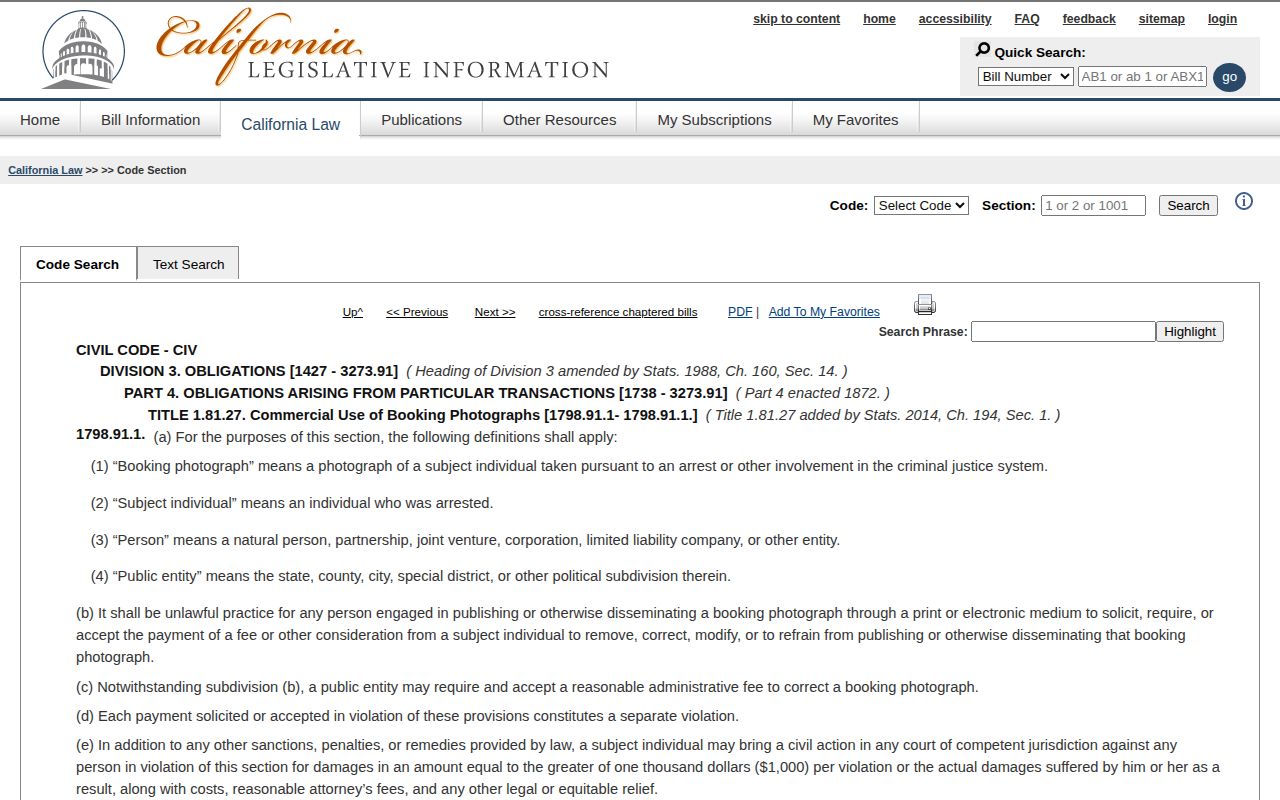
Don't confuse the anti-payment law with sealing an agency record or refreshing a search result. Those are separate tools. Penal Code section 851.91 offers a petition path for qualifying arrests without conviction. Section 851.93 triggers automatic DOJ review in stated cases, and section 851. California Courts publishes the CR-409 and CR-410 forms, but sealing restricts official access under law, and it can't promise every copied page online has caught up.
Correcting Alameda Booking Photo Copies
Start at the source. Get the dismissal, acquittal, sealing order, corrected identity file, or agency correction. Then ask the government custodian to apply it. Only after that should you use a publisher's free policy. RecentlyBooked lists free requests for dismissal, sealing, wrong person, juvenile material, duplicates, and inaccurate data. Mugshots.com asks for court documents on qualifying updates and says it accepts no payment. Muglist also states it never charges. Once the source changes, Google or Bing tools may refresh stale search text. Delisting a result does not seal the record itself. Steer clear of any company promising paid special access or guaranteed deletion. Official agencies never demand electronic payment to resolve a release or a warrant. Does a blank search prove deletion? No. Release, an exemption, sealing, another agency, or a current-custody time limit can each explain the absence.
Older Alameda County Record Archives
ACSO Policy 2.16 sorts retention into classes. Felony material is permanent. Misdemeanors last four years after closure. Infractions and citations run two years, DUI or reckless driving seven, hit-and-run six, and certain reports and logs three. Litigation holds can stretch those terms, and permanent digital copies may exist. The policy lists no standalone booking-photo period, so anyone promising a fixed photo-retention window is guessing.
Search the current systems first and preserve every identifier. Request records from ACSO or the city, then seek the court file. California State Archives guidance says historic sheriff collections can include jail registers, booking sheets, photographs, and fingerprints, but that doesn't prove modern Alameda files were transferred. Ask Archives staff about a specific accession. Missing data may be confidential, sealed, migrated, held for litigation, or simply filed under another category.
Alameda Arrest Warrants and Most Wanted
ACSO publishes no public active-warrant portal. For case searches, use the Alameda Odyssey portal. Then confirm with the responsible court, records unit, or counsel. Odyssey covers online criminal case information with activity since 2005, and it omits some documents. A blank result there can't certify that no warrant exists.
The ACSO Most Wanted list is not a live warrant database. It has carried six profiles, some with old image or case dates. There is no dependable update schedule. ACSO itself disclaims accuracy and timeliness. Never approach, follow, or confront anyone on the list. Instead, use the official anonymous tip line at 510-667-3622, or call 911 in an emergency.
Remember what each tool does. A court entry locates a case. An agency confirms warrant status, and a wanted profile collects tips. No single source settles present status on its own.
After an Alameda County Arrest
Penal Code section 825 generally requires an appearance before a magistrate without unnecessary delay. Subject to calendar exceptions, that means within 48 hours. The statute promises no roster and no release time. At arraignment the court takes up filed charges and release, and a prosecutor may file charges that differ from those booked or decline to file at all. The court records page explains how to get access.
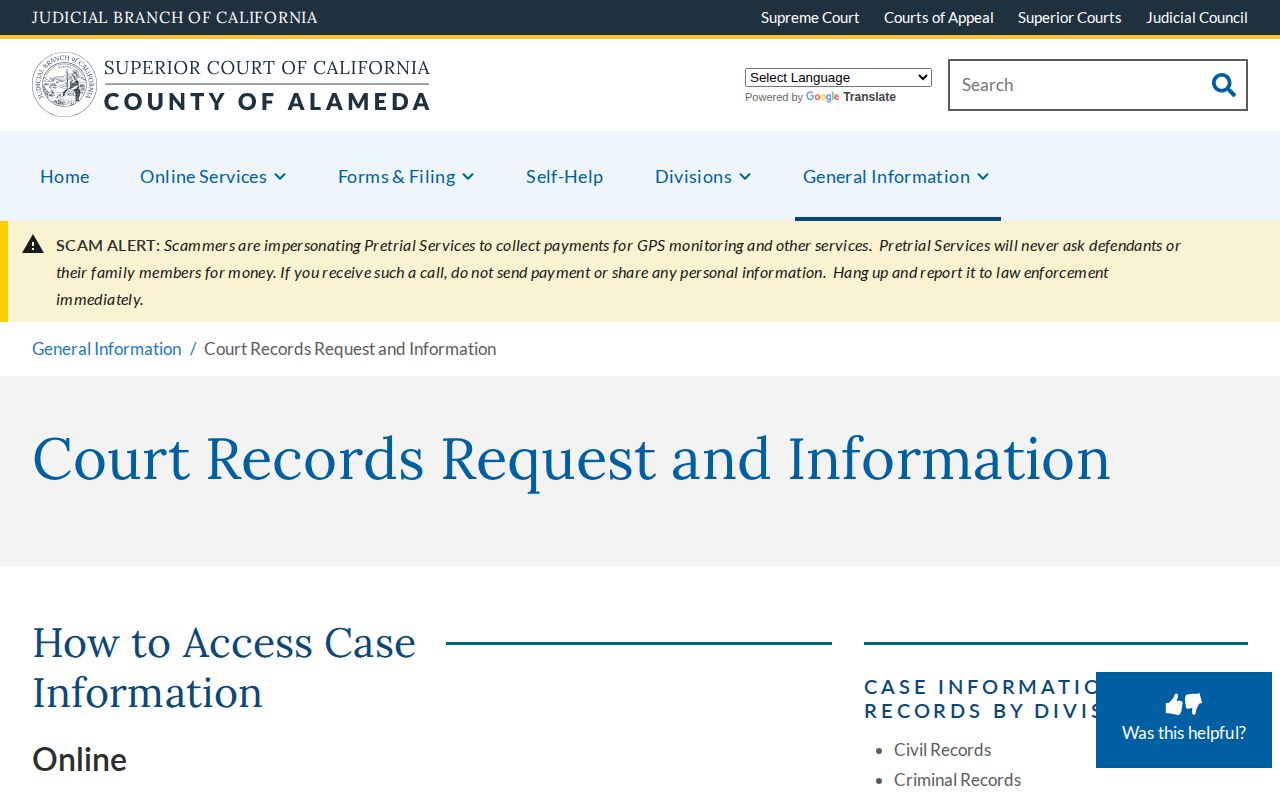
Court data supplies the later disposition a booking record cannot. Odyssey covers cases with activity since 2005. Many cases dating back to 1974 can be researched in person. Not every document is online. Sealed and confidential files sit outside that access entirely. Bail listed at booking can shift under court schedules, judicial orders, or later conditions. Check the final disposition before drawing conclusions.
Custody Beyond Alameda Arrest Records
An Alameda arrest record is only the first stop. CDCR's CIRIS system handles state-prison custody, so it shows no fresh Alameda arrests. Look for a name, CDCR number, age, and institution. The same search shows commitment county, admission date, and parole-hearing details. Federal prisoners sit elsewhere. The Bureau of Prisons locator reaches back to 1982, though it offers no booking-photo field. Immigration custody runs through ICE's own detainee locator.
For county-level updates, VINELink Inmate Check lays out Alameda's free linked VINE service. VINE sends release and transfer alerts. What it will not give you is a mugshot. It also lacks final case outcomes. There is no guaranteed refresh interval or any kind of safety plan.
Each city agency publishes differently. Oakland posts date-labeled Daily Log PDFs plus a dashboard limited to custodial arrests. Fremont's Week in Review offers weekly statistics and selected cases. Hayward's blotter counts arrests each week, including some that ended in citation and release. Those definitions do not match. Adding the three totals together produces a meaningless county figure. City publications track police activity. The ACSO locator shows a current county custody state. Two different jobs.
Local news adds color, not custody confirmation. The Berkeley Scanner documented the retirement of the county daily log. The Oaklandside and East Bay Times cover selected public-safety stories. Neither runs a continuous official booking feed. Story images may be news photographs or agency-released case material. Before trusting a report, weigh its publication date. Check the image source. Check the arresting agency and any later court disposition.
Skip the aggregator shortcuts here. Arrests.org, Busted Newspaper, and Mugshots.zone carry no verified Alameda section. Their general landing pages imply nothing about local coverage. Invent a county URL and you land on nothing real. One site branding itself a California official-records guide is not a government source. It also repeats an obsolete claim about a last-24-hours checkbox. When a secondary page conflicts with county, city, or court channels, the official ones win.
The county Public Protection directory and app review list no ACSO-branded booking application. The directory does include the inmate locator, Most Wanted, Santa Rita visiting information, and VINE. Sheriff news and social accounts post scam alerts and policy announcements. They are not reliable new-booking feeds. The national VINELink app belongs to a separate system. It publishes no county booking-photo roster either.
Verify Alameda Arrest Record Changes
When sources clash, keep the paper trail intact. Record the agency name, publication date, PFN, booking time, and court case number. Do not trust a copied headline. A cite-and-release event can sit in a city log. Yet it may never become a Santa Rita custody result. Someone moved out of county custody may resurface in a state or federal system. Vanishing from the current roster has several explanations. Release, transfer, exemption, sealing, or routine rolloff all look identical from outside. That is why one search rarely tells the whole story. The originating agency proves the arrest. ACSO confirms county custody, and Superior Court holds the case outcome.
Alameda County Sheriff’s Office Location and Directions
Public Record Search
Sponsored Results